
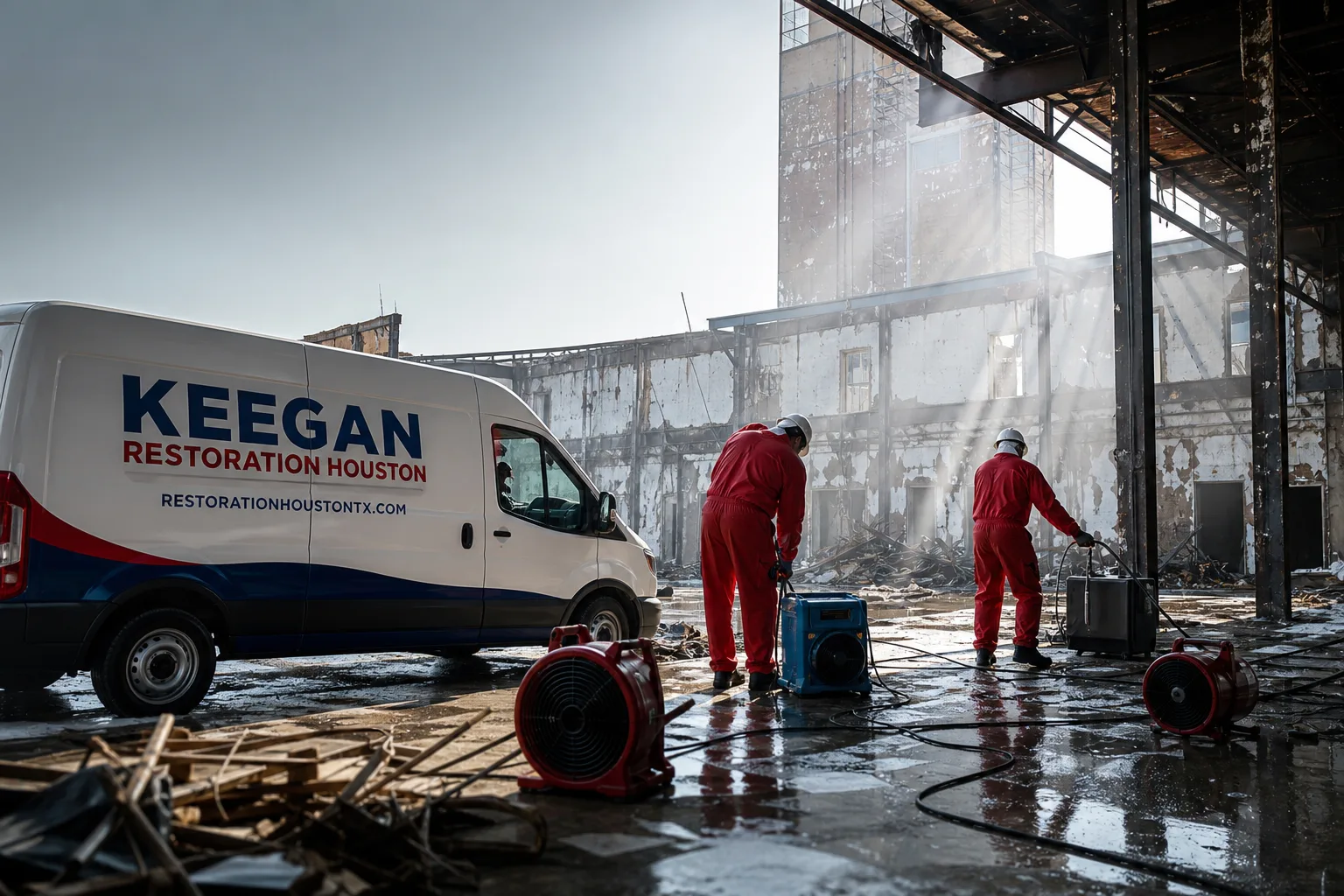
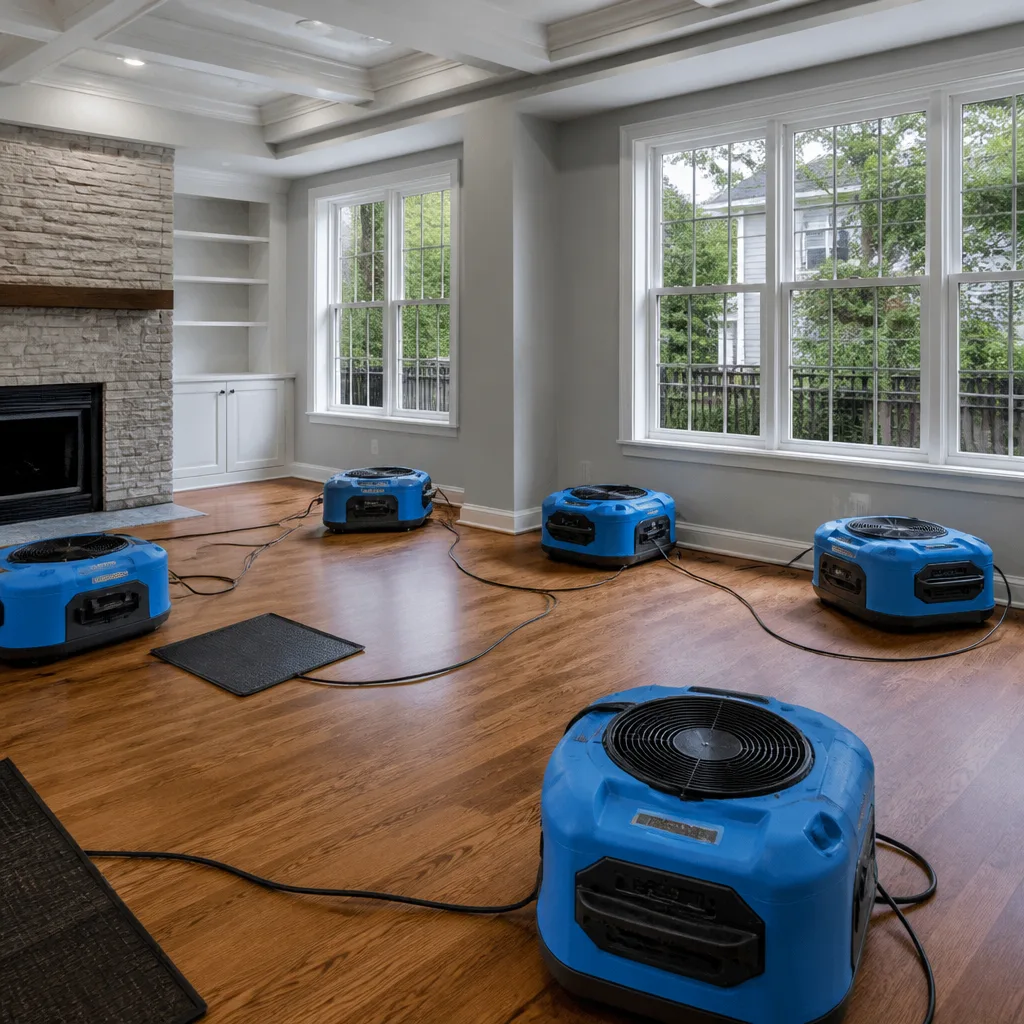
 Water damage drying
 Fire & smoke cleanup
 Mold remediation
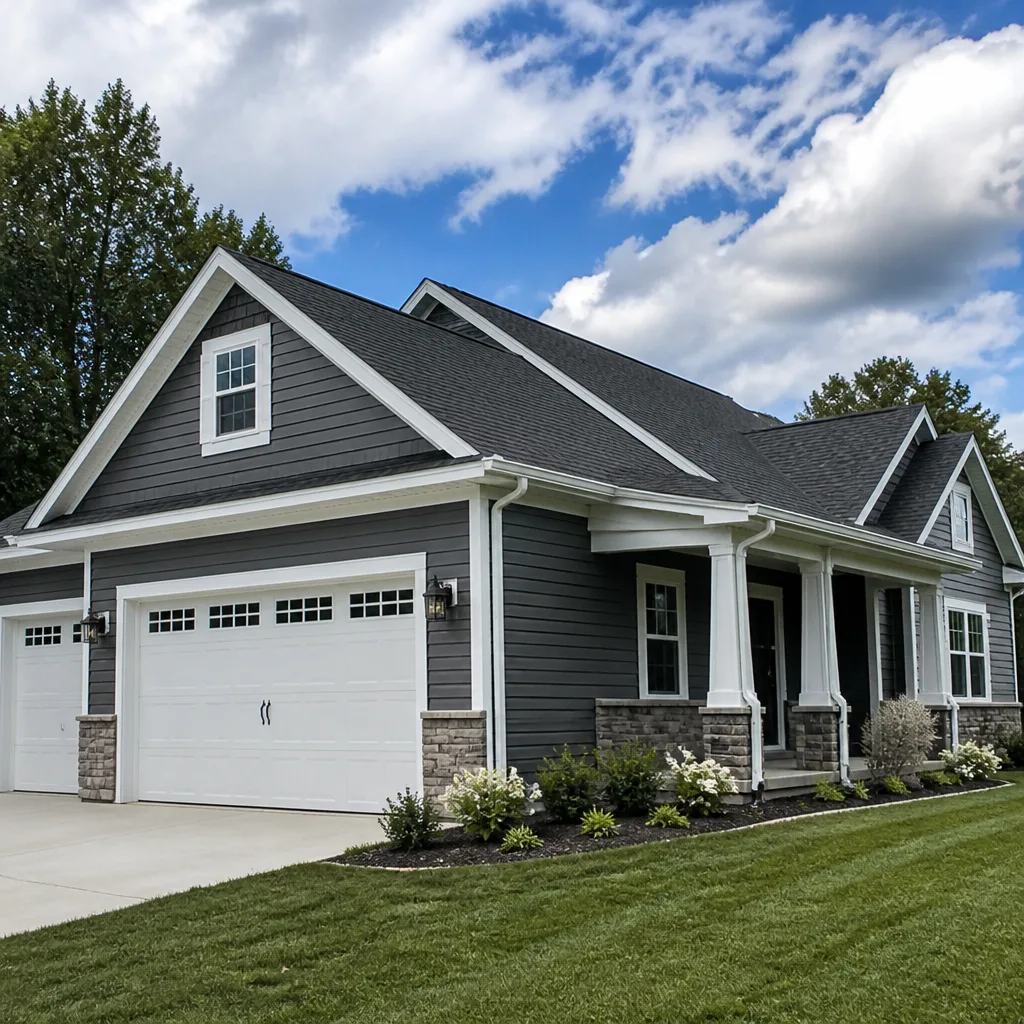 Storm response
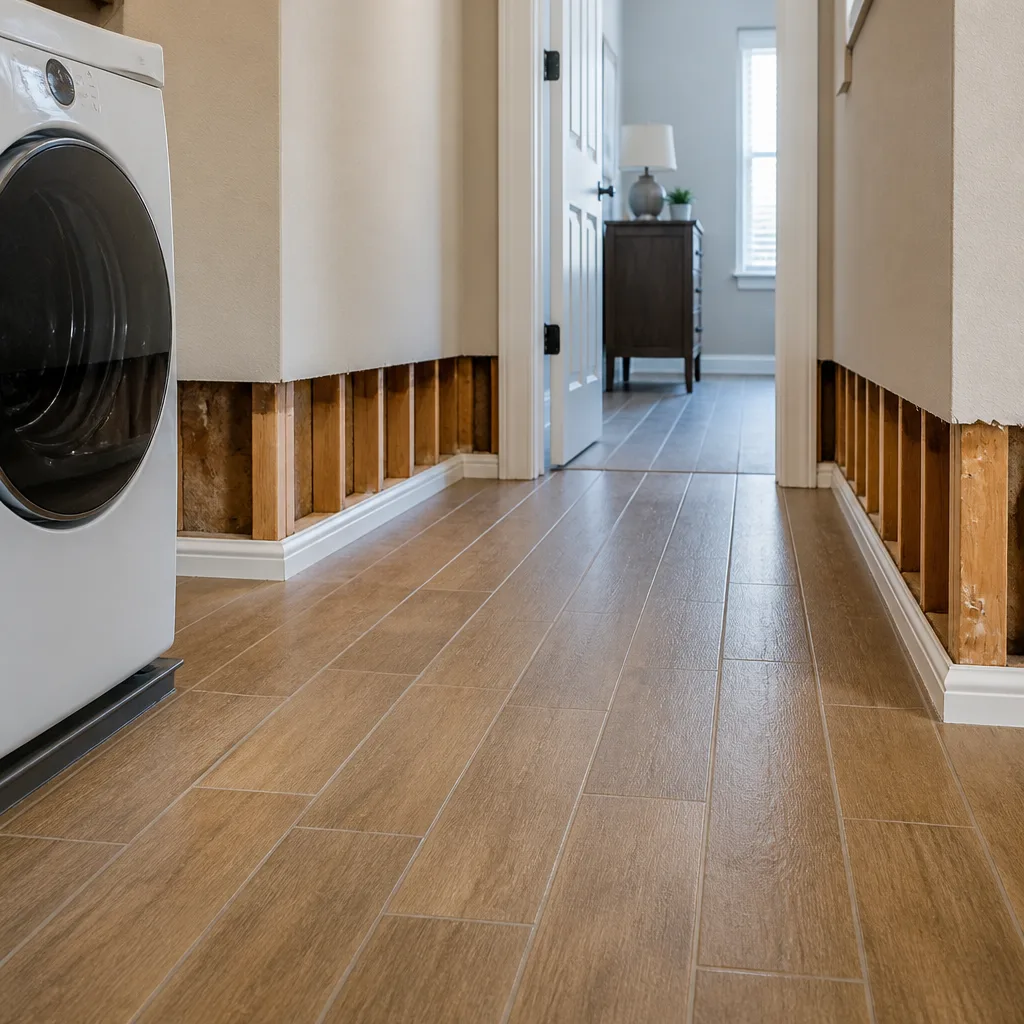 Sewage cleanup
 Reconstruction
Free visual inspection and a written scope of work before any mitigation begins - photos, moisture readings, and drying logs go in your claim file
The scope we write is the scope we bill. Anything new gets shown to you, in writing, before we touch it.
Get your free estimateRestoration work we handle
See the difference
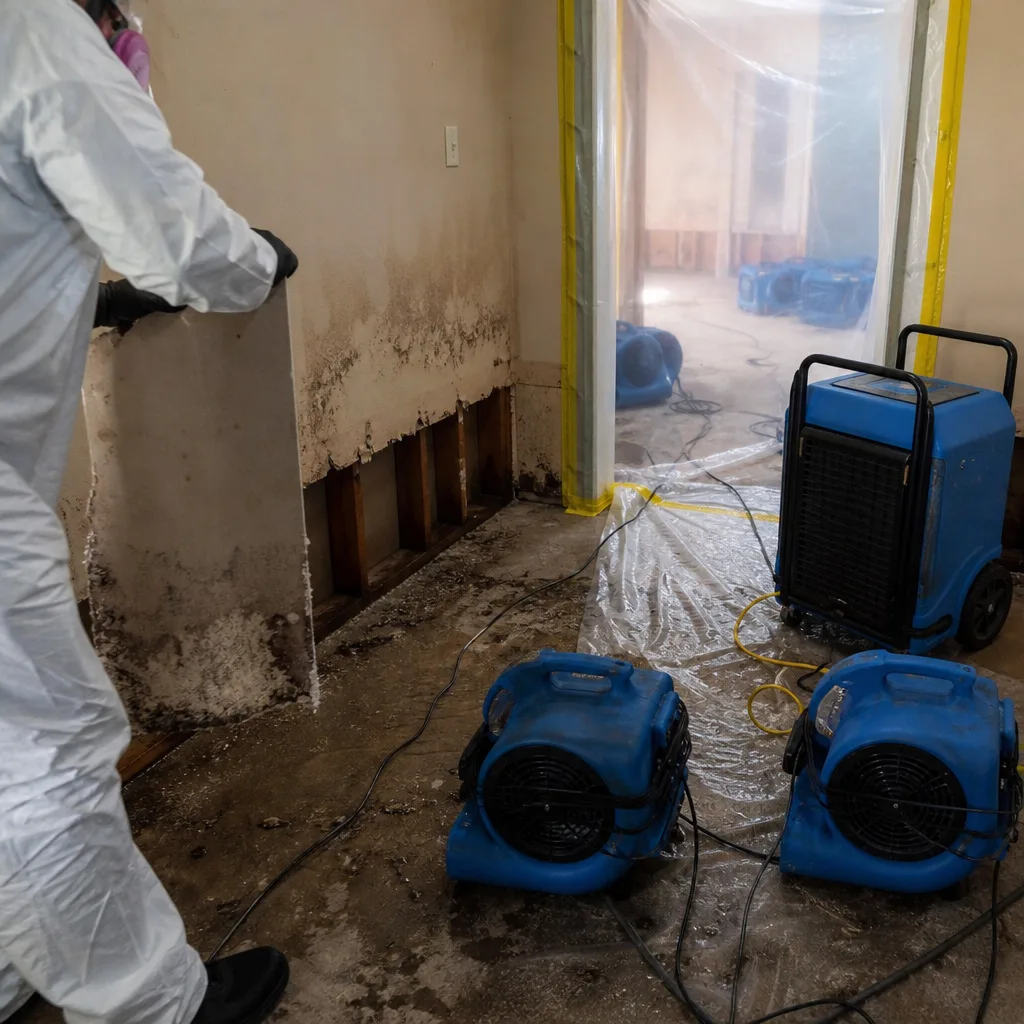 Before
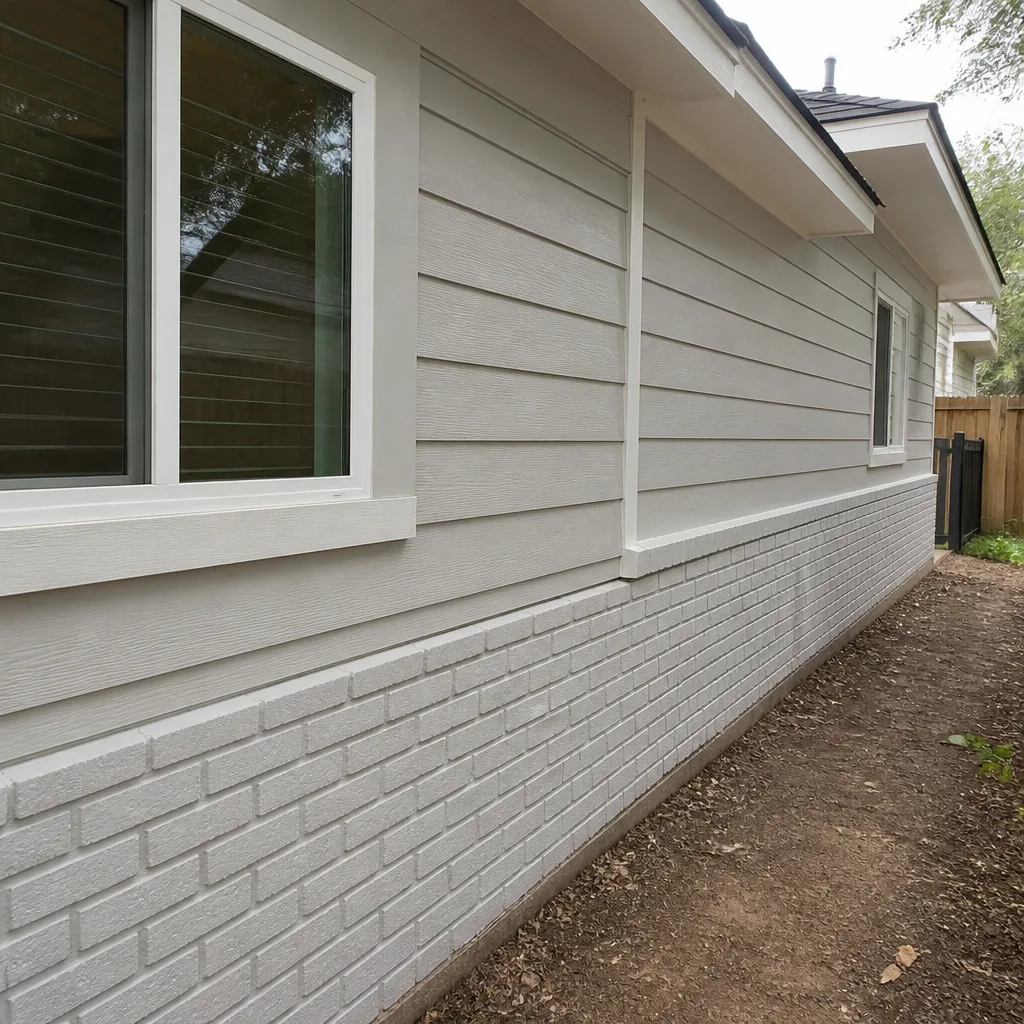 After
After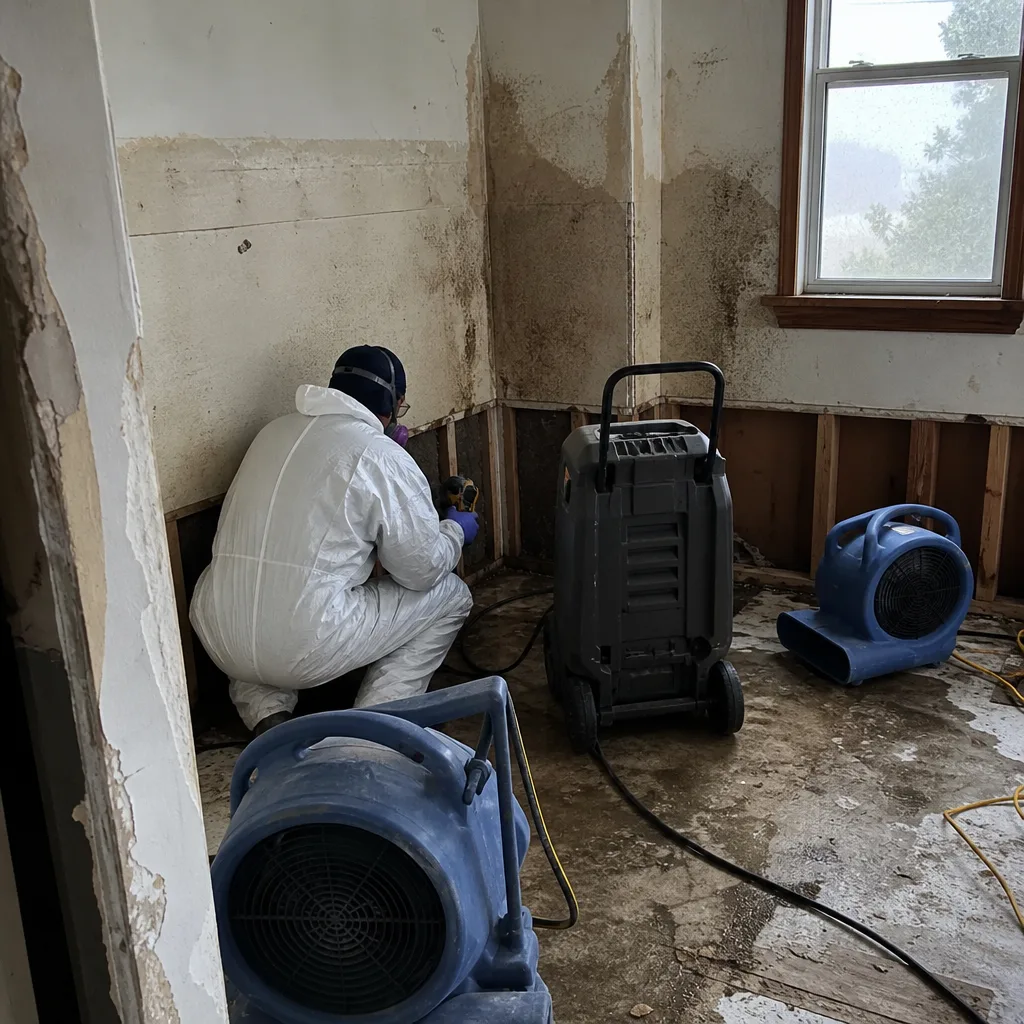 Before
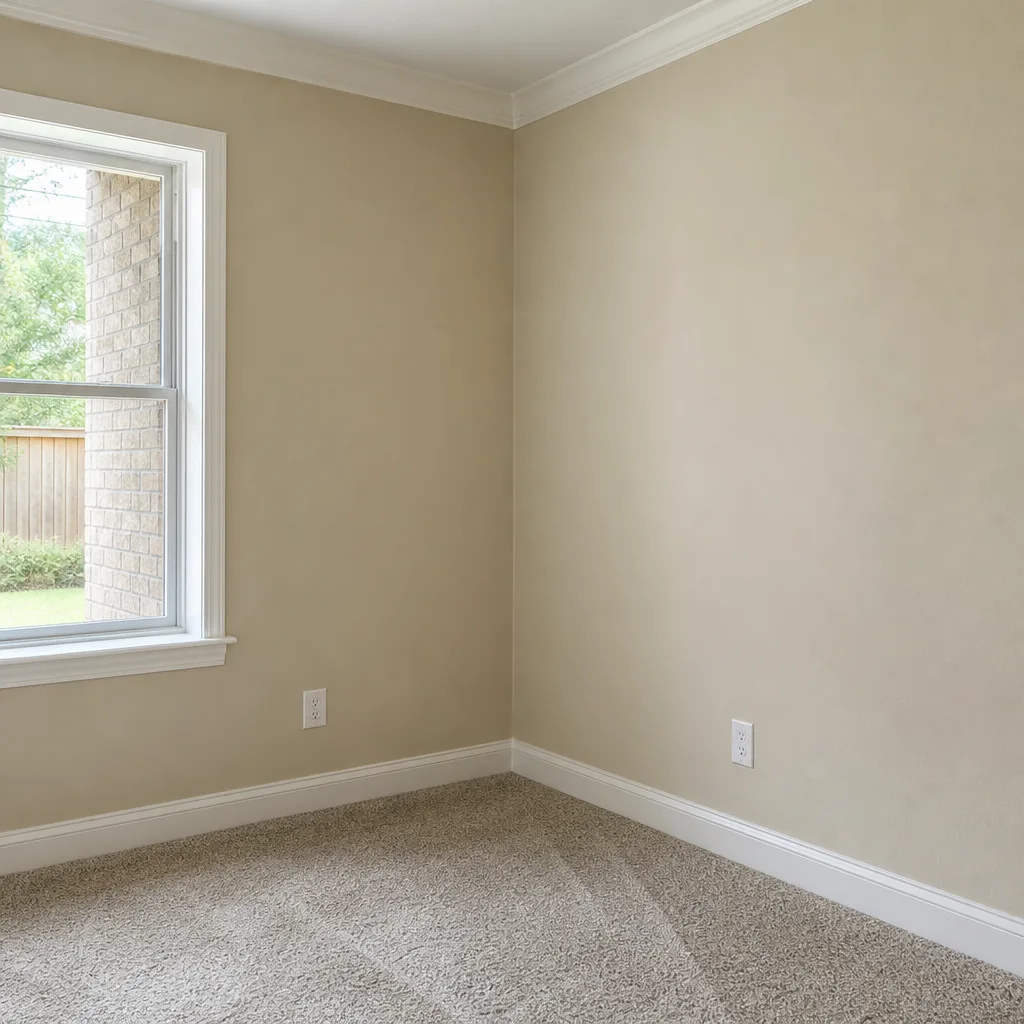 After
After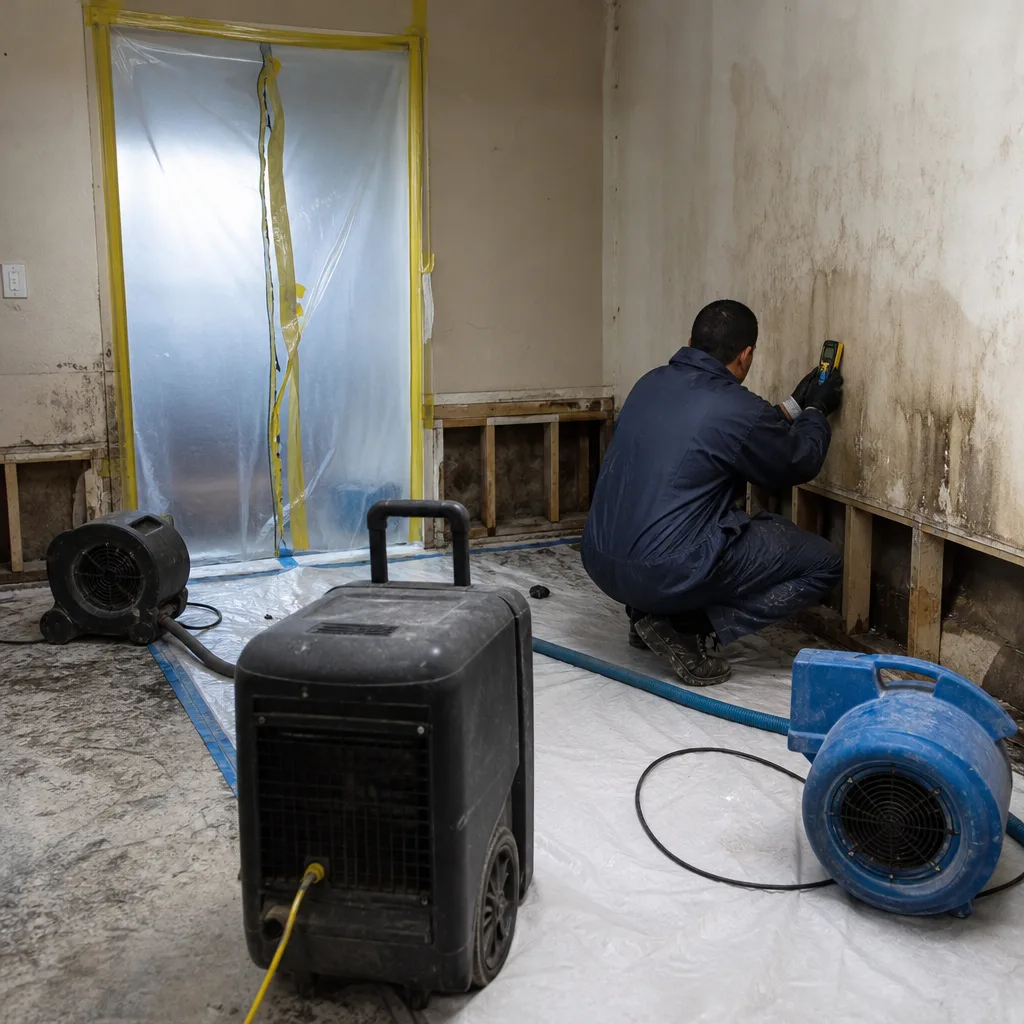 Before
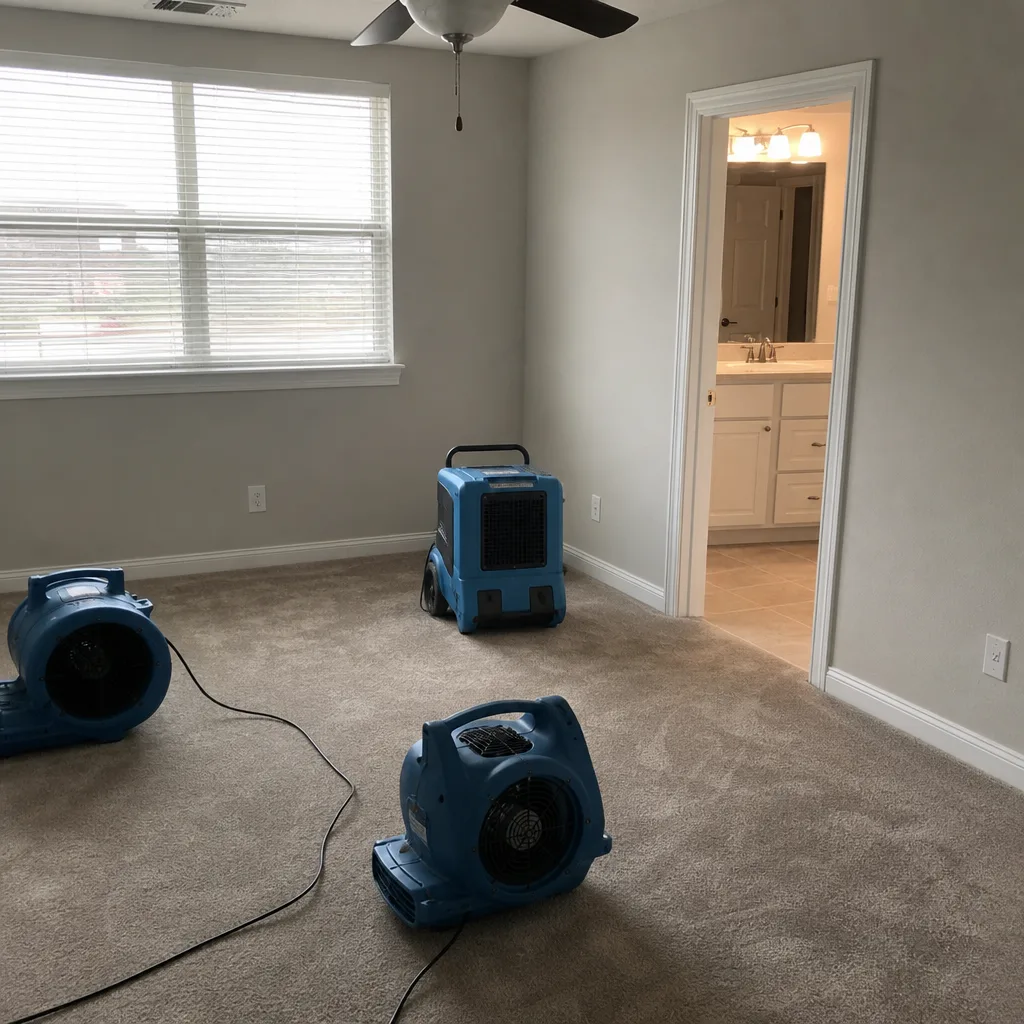 After
AfterHow Much Does Damage Restoration Cost in Houston?
Most Houston homeowners pay between $1,200 and $6,500 for water damage restoration, while fire damage jobs typically run $4,000 to $28,000, and mold remediation averages $1,500 to $5,500 depending on how far the problem has spread. These are real working numbers for the Houston market in 2026, based on what we see on the ground every week from Katy to Kingwood to Pearland. The final figure on your job comes down to square footage, water category, how long the damage sat, and what materials need to come out.
If you’re standing in water right now, stop reading and call (325) 550-1783. A live person answers, day or night, and we’ll give you a written price before any equipment comes off the truck.
Damage Restoration Cost Breakdown (2026)
Here’s what we quote for the most common restoration jobs in Houston right now. These numbers reflect local labor rates, equipment costs, and the way Houston homes are built. If you’ve got a 1970s ranch in Sharpstown, a 1990s two-story in Cypress, or a new build in Fulshear, the underlying numbers stay similar; what changes is what got wet and how long it stayed that way.
| Service | Typical Houston Range | What You’re Paying For |
|---|---|---|
| Water extraction only (single room) | $400 – $900 | Standing water removal, moisture mapping, initial assessment |
| Full water mitigation (Category 1, one room, under 200 sq ft) | $1,200 – $2,800 | Extraction, drying equipment placement, monitoring, minor material removal |
| Full water mitigation (Category 2, multiple rooms, 400-800 sq ft) | $3,500 – $6,500 | Extraction, antimicrobial treatment, carpet/pad removal, structural drying, monitoring visits |
| Sewage cleanup (Category 3 water) | $4,000 – $11,000+ | Containment, full PPE protocols, contaminated material disposal, sanitation, structural drying |
| Mold remediation (contained area, under 100 sq ft) | $1,500 – $3,500 | Containment, HEPA air filtration, affected material removal, antimicrobial treatment |
| Mold remediation (multiple rooms or HVAC involvement) | $4,000 – $8,500 | Full containment, negative air, duct cleaning, extensive material removal, post-remediation verification |
| Fire damage restoration (small kitchen fire) | $4,000 – $9,000 | Soot removal, odor treatment, structural cleaning, minor rebuild coordination |
| Fire damage restoration (whole-home smoke and soot) | $12,000 – $28,000+ | Full content cleaning, structural cleaning, sealant application, odor neutralization, rebuild scope |
| Storm damage / roof leak interior restoration | $1,800 – $6,000 | Water extraction, drywall removal, drying, mold prevention treatment, repair scope |
Every one of these numbers assumes the damage is addressed within 24 to 72 hours of occurrence. Let it sit longer, and the price climbs. Houston’s humidity does not do favors to wet drywall.
Keegan Restoration Houston puts the exact dollar figure in writing before any work begins. That’s The Garrison Standard, and it’s non-negotiable on our end. The price on the written scope is the price you pay, even if the job runs longer than we projected.
What Time of Day (or Night) Costs You
Houston restoration companies, including ours, answer the phone 24/7 because water does not check a clock. Emergency after-hours dispatch does not carry an extra surcharge at Keegan. What does cost more: waiting. A pipe that bursts at 2 a.m. and gets extracted by 5 a.m. is a $1,200 problem. That same pipe left until 5 p.m. the next day in a Houston summer becomes a $4,500 problem with mold risk layered on top.
What Affects Damage Restoration Pricing in Houston
Restoration pricing is not a mystery. It’s math, with local variables. Here’s what moves your number.
- Water category and contamination level. Category 1 is clean water from a supply line or faucet. Category 2 is gray water, like washing machine overflow. Category 3 is sewage or floodwater. Category 3 demands full containment, PPE, and disposal of anything porous it touched. That is a fundamentally different job, and the price reflects it.
- How long the water sat before extraction. Houston’s average humidity runs 70 to 90 percent most of the year. Wet drywall in a house with the HVAC running will wick moisture horizontally within a day. After 48 hours, you’re usually looking at mold remediation on top of water mitigation.
- Square footage and affected rooms. A 400-square-foot kitchen and utility room runs differently than a 1,800-square-foot slab foundation with water under the flooring. Houston’s older neighborhoods, like Garden Oaks and Timbergrove, have pier-and-beam foundations that allow water underneath; slab homes in Clear Lake hold moisture differently and may require more aggressive drying.
- Materials that got wet. Carpet and pad come out fast and dry fast. Tile over concrete can hide water underneath. Hardwood floors in Houston’s older homes, especially original oak in Heights bungalows, often cup and need sand-and-refinish after drying. Each material has a different labor cost and a different timeline.
- Mold presence at mitigation start. If visible mold is growing when we arrive, the scope shifts. We’re not just drying; we’re containing, removing, and sanitizing. That adds equipment, labor, and material disposal fees.
- Asbestos and lead considerations. Houston homes built before 1978 may have lead paint. Homes with popcorn ceilings or old floor tile may have asbestos. If the damaged area includes those materials and they need removal, testing and abatement add a line item. We’ll tell you before any work starts.
Does Insurance Cover Damage Restoration in Houston?
Most Houston homeowners policies cover sudden and accidental water damage, like a burst supply line or a water heater failure. They typically do not cover gradual leaks, seepage, or lack of maintenance. Flood damage from hurricanes or street flooding requires a separate NFIP flood policy; standard homeowners insurance does not cover it, period.
The difference between a $1,500 out-of-pocket job and a $6,500 job paid entirely by insurance often comes down to documentation. Keegan Restoration Houston documents every phase: extraction start time, moisture readings using professional-grade meters, photos before and after, equipment placement logs, and the final scope of loss. That documentation is formatted to support your claim and gets submitted directly to your adjuster. It’s one of the reasons our technicians work to IICRC standards and run equipment from Dri-Eaz, Phoenix, XPOWER, B-Air, and Injectidry. If the claim calls for proof, we have the paper.
Shane Pruitt, who runs Keegan Restoration Houston, will tell you the same thing he tells every customer before any equipment moves: the price goes in writing first. If insurance is involved, that written scope becomes the foundation of your claim.
How Much Does Water Damage Restoration Cost in Houston?
Water damage restoration in Houston runs $1,200 to $6,500 for a typical single-event claim, with sewage backups pushing past $10,000. Here’s the math we walk through with customers on the first phone call:
- Extraction: $300 to $800 for a single room, depending on water volume and access.
- Drying equipment: $50 to $85 per day, per air mover; $65 to $110 per day for a dehumidifier. A typical single-room job runs three to five air movers and one dehumidifier for three to five days.
- Material removal: $100 to $400 per room for carpet and pad; $2 to $4 per square foot for drywall cut and removal.
- Antimicrobial and sanitation: $0.50 to $1.25 per square foot of treated surface.
- Monitoring visits: Included in Keegan’s scope; some companies charge $75 to $150 per visit.
The single biggest driver in Houston: how fast the customer calls. If you call within the first hour of a pipe burst, we can usually save the carpet, keep the drywall, and contain the job to one room. Call after a weekend away, and you’re looking at a different scope entirely. Houston summers are brutal on wet interiors.
Call (325) 550-1783 and tell us what happened. We’ll give you a realistic range over the phone and then put the exact number in writing on site.
How Much Does Mold Remediation Cost in Houston?
Mold remediation in Houston costs $1,500 to $8,500 for most residential jobs. The range is wide because mold is a conditions problem, not a single problem. A bathroom ceiling stain from a slow drip might be contained and removed in half a day for under $2,000. Mold that spread through an attic after a roof leak and into the HVAC ducts is a different job: containment, negative air pressure, full drywall removal, duct cleaning, and post-remediation verification testing.
Houston’s climate makes mold a year-round concern, not a seasonal one. We see two spikes: the spring shoulder season when humidity climbs before AC units cycle on, and the weeks after hurricane events when water intrusion sits in walls before homeowners return from evacuation. If you smell must but cannot see mold, call us. We’ll moisture-map the suspect areas and find where the water is coming from. That visit gets you a written scope and a price, not a guess.
How Much Does Fire Damage Restoration Cost in Houston?
Fire damage restoration in Houston costs $4,000 to $28,000+, and the plus sign matters. A contained kitchen fire with smoke damage in two rooms might land around $5,000 to $8,000 for full cleaning, deodorization, and sealant. A fire that spreads through the hall, into the attic, or involves the electrical panel changes the scope from restoration to rebuild.
What homeowners often underestimate is smoke. Smoke penetrates drywall, insulation, ductwork, and every soft surface in the house. Even a small fire in one bedroom can leave the entire home smelling like an ashtray for months if the deodorization is not done correctly. We use professional-grade air scrubbers, thermal fog deodorization, ozone treatment where appropriate, and sealant application on cleaned structural surfaces. It’s methodical work, and it’s the difference between a house that smells clean and one that smells like the fire every time the humidity rises.
If you’re dealing with fire damage, your next call should be to your insurer and then to us. The order matters. Start the claim, then have us do the emergency board-up and smoke mitigation. Time is working against you from the moment the fire is out; soot becomes acidic and etches surfaces within days.
How to Save on Damage Restoration
Nobody wants to overspend on a restoration job. The good news: the biggest savings are behavioral, not financial. Here’s how Houston homeowners keep restoration costs down.
Step 1: Call immediately, not tomorrow.
The clock is the most expensive line item on any water job. A pipe bursts at noon; if we’re extracting by 2 p.m., the job is often under $2,000. Wait until the next day, and you’ve added drying time, material removal, and possibly antimicrobial treatment. Wait two days, and mold enters the conversation. The fastest way to save money on damage restoration in Houston is to call the moment you see water. (325) 550-1783 gets a live person, 24/7.
Step 2: Stop the source, if it’s safe.
Turn off the water at the main shutoff. Kill power to the affected area at the breaker if water is near outlets or appliances. Do not enter standing water in a room with active electrical. Call us from outside if you need to.
Step 3: Document everything before you move anything.
Take photos and video on your phone before you start mopping or moving furniture. Your insurance adjuster will want to see the original condition. We’ll do our own documentation when we arrive, but your photos establish the timeline.
Step 4: Don’t DIY what you can’t verify.
Putting a box fan on wet carpet feels like action, but it can actually push humidity deeper into the structure. Professional drying uses psychrometrics, the science of measuring air temperature, humidity, and dew point to calculate exact drying conditions. Our technicians run Dri-Eaz dehumidifiers, Phoenix air movers, and XPOWER circulation fans based on moisture readings, not guesswork. The equipment matters less than the math behind it; that’s the IICRC-standard approach.
Step 5: Get the price in writing before work starts.
This might be the most overlooked cost-control step in the industry. Some restoration companies in Houston give a verbal estimate, start work, then present a larger bill at the end. Keegan Restoration Houston operates under The Garrison Standard: the written price comes before any work begins, and it does not move at the door. If the scope changes because we find hidden damage, we stop, explain, document, and get your sign-off before proceeding. You always know where you stand.
Water, Fire, and Mold: What’s the Real Timeline in Houston?
Restoration is a process, not an event. Here’s what to expect, step by step, based on how Keegan Restoration Houston runs a typical water mitigation job:
- Call and dispatch (within 60 minutes). You call (325) 550-1783. A live person answers. We tell you our availability window; in Houston, our crews are typically on site within one to two hours for water emergencies.
- Assessment and written scope (first 60 minutes on site). The technician walks the property, identifies the water source, checks the electrical panel, runs moisture readings, and writes the full scope of work with exact pricing. You approve it, we start. No work happens before your signature.
- Extraction (immediate). Standing water comes out with truck-mounted or portable extraction equipment. This usually takes 30 to 90 minutes for a typical room.
- Removal of unsalvageable materials (same visit if possible). Wet carpet pad, saturated drywall, and baseboards come out. We cut only what cannot be saved, removing water-logged sections cleanly with a drywall knife so later repair is straightforward.
- Equipment placement (day one). Air movers and dehumidifiers go in. For a standard three-room job, that’s usually four to six air movers and one or two dehumidifiers running continuously.
- Daily monitoring (days two through five). We return daily, check moisture readings, adjust equipment, and document everything. Most Houston water jobs dry within three to five days; slab foundations can run longer.
- Final clearance and equipment pickup (day three to seven). Moisture readings confirm the structure is dry. Equipment comes out. You get the final documentation pack for your insurance claim.
- Repair scope (after drying). Reconstruction is a separate scope. We coordinate with your rebuild contractor or handle the repair scope if it’s within our restoration work.
Every step gets documented and formatted for your insurance claim. That’s part of The Garrison Standard, and it’s why Houston adjusters are familiar with our paperwork.
FAQs – Damage Restoration Cost
How much does water damage restoration cost per square foot in Houston?
Houston water damage restoration typically runs $3.50 to $8.50 per square foot for standard mitigation, which includes extraction, drying equipment, and basic material removal. The per-square-foot number drops on larger jobs and rises on smaller jobs, because every job carries baseline costs for dispatch, assessment, and equipment setup. Call (325) 550-1783 and we’ll give you a realistic per-square-foot estimate for your specific situation.
Is it cheaper to repair or replace water-damaged drywall?
Repairing is almost always cheaper: replacement runs $2 to $4 per square foot for drywall cut-out, replacement, tape, float, and texture, while repairing might cost $1 to $2 per square foot if the damage is minor. But here’s the truth: water-damaged drywall that has been wet more than 48 hours in Houston’s humidity usually needs replacement, not patching; wet drywall loses structural integrity and becomes a mold food source. We’ll tell you which one applies to your wall, and the written scope shows the exact cost.
How much does mold remediation cost in Houston?
Mold remediation in Houston costs $1,500 to $8,500 for most homes, with an average around $2,800 for a typical bathroom or closet job. The range depends on the affected square footage, whether the mold is contained or widespread, and whether HVAC ducts are involved. Houston’s heat and humidity make mold aggressive; a small spot today becomes a bigger job in three weeks. Call (325) 550-1783 and we’ll assess it and put the price in writing.
Does homeowners insurance cover water damage restoration in Houston?
Most Houston homeowners policies cover sudden and accidental water damage, like burst pipes, water heater failures, or appliance leaks; typical coverage is the full restoration cost minus your deductible. They do not cover gradual leaks, seepage, maintenance issues, or flood damage from rising water. Our documentation is formatted specifically to support your claim, and we’ll walk you through what your policy covers before you commit to any work.
Can you come today for a water damage emergency in Houston?
Yes. Keegan Restoration Houston answers the phone with a live person 24 hours a day, 7 days a week, including holidays, and our crews are typically on site within one to two hours across the Houston metro. Whether you’re in Meyerland, Spring Branch, or down in Friendswood, call (325) 550-1783 and we’ll give you a dispatch window right then. The faster we get there, the more of your home we save, and the lower your final bill.
What does the 365-Day Done Right Promise cover?
Every repair Keegan Restoration Houston performs is backed by a written one-year guarantee: if the work fails within 365 days, we return and make it right at no charge. That covers the mitigation and restoration work we performed. It’s called the 365-Day Done Right Promise, and it’s in writing on every job we do. If something isn’t right, call us. We show up.
Houston’s Restoration Landscape: What Makes This Market Different
Houston is not a generic restoration market. It’s a coastal subtropical city built on clay soil with a high water table, a flat landscape that floods easily, and humidity that never really quits. That shapes every restoration job we run.
Homes in Bellaire and Meyerland sit in designated flood zones. Homes in Kingwood and Clear Lake deal with hurricane-driven wind damage and roof leaks. The Heights has pier-and-beam foundations that let water under the house; Katy and Cypress have slab foundations that trap moisture inside walls. Each neighborhood has its own restoration fingerprint, and a good crew knows the difference before the truck parks.
We’ve seen the same failure patterns repeat across the metro: washing machine hoses that burst while owners are at work, water heaters that fail catastrophically in garages, AC condensate lines clogging in attics during the first heat wave of May, and toilets overflowing in second-story bathrooms while families are asleep. In Houston, the water problem is rarely exotic. It’s usually a $12 part that failed at the worst possible moment.
That reliability, combined with Houston’s clay soil and the region’s propensity for foundation movement, means plumbing failures are a when, not an if. Smart Houston homeowners know their main water shutoff, keep our number saved, and act fast when water shows up where it shouldn’t.
Shane Pruitt and the Keegan Restoration Houston crew run every job to The Garrison Code: show up inside the window, put the price in writing, do the work by the book, leave the site clean, and stand behind it for a full year. That’s not marketing language. That’s the operating standard. Every job. No exceptions.
Back to our home page for more on who we are and how we work.
Written by Shane Pruitt, Owner at Keegan Restoration Houston, serving the Houston metro since 2005 as part of the Garrison Partners family.
Pricing reflects the Houston market as of 2026. Keegan Restoration Houston offers free estimates – call (325) 550-1783.
What Our Customers Say
"Good drying job. Fans were loud at night, but they explained it. Floor passed the moisture check."
- Rich N."Documented everything with photos for my insurance. No arguments from the adjuster."
- Carmen R."Fire damage in the kitchen from a stove flare-up. They cleaned the soot, removed the burnt cabinets, and deodorized the house."
- Lorraine D.