
 Water damage drying
 Fire & smoke cleanup
 Mold remediation
 Storm response
 Sewage cleanup
 Reconstruction
Free visual inspection and a written scope of work before any mitigation begins - photos, moisture readings, and drying logs go in your claim file
The scope we write is the scope we bill. Anything new gets shown to you, in writing, before we touch it.
Get your free estimateFast, Reliable Fire Damage Restoration Across Houston
Fire damage restoration in Houston almost never starts with fire. It starts with water. The same firefighting effort that saves your house also floods it, and in a city built on flat, clay-heavy soil with subtropical humidity, that water becomes a mold problem within 48 hours if it isn’t pulled correctly. We know this because we work Houston homes every week, from Meyerland ranch houses to Braeswood bungalows, and we’ve seen what happens when someone treats a Houston fire job like a dry-climate fire job. That’s why our crews show up fast, with professional-grade extraction and drying equipment, and a written price before any work starts. Call (325) 550-1783 any hour, day or night, and a live person answers.
Why Keegan Restoration Houston Is Houston’s Preferred Fire Damage Restoration Company
Houston homeowners don’t need a contractor who talks a good game. They need a crew that shows up inside the window they gave you, puts the price in writing, and stands behind the work for a full year. That’s The Garrison Standard, and it’s how we’ve run every fire, water, and mold job since joining the Garrison Partners family in 2005. Our technicians are background-checked, uniformed, and dispatched locally from our Houston office. They work to IICRC, RIA, and IFA standards, and they document every step of the job with photos and moisture readings formatted to support your insurance claim.
A fire in your home is disorienting enough. You shouldn’t also have to wonder whether the contractor will answer the phone, move the price at the door, or leave the site worse than they found it. Keegan Restoration Houston operates differently. The written price you agree to before work begins is the price you pay, full stop. That’s not a marketing line. It’s the rule on every job. And if a repair fails within one year, we return and make it right at no charge under the 365-Day Done Right Promise. Free second visit included. That’s the guarantee, in writing, every time.
We’ve earned our reputation in Houston by being the crew homeowners call when they’re done guessing. When the fire department leaves and the house is wet, smoky, and torn open, the homeowner’s first fear is the damage spreading while they wait. Our people get there fast, explain exactly what they’re doing in plain language, and start stabilizing the property. No phone trees, no call-back queues. A live person answers 24/7. And when we say we’ll be there, we show up inside the window.
Restoration work we handle
Fire and Water Damage Restoration in Houston
Fire and Water Damage Restoration in Houston is a combined job because the water used to suppress the fire is often a bigger threat to the structure than the flames themselves. A kitchen fire in a 1980s slab-on-grade ranch, for example, might dump hundreds of gallons of water through the ceiling. That water soaks into drywall, insulation, and framing. In Houston’s humidity, mold growth begins within 24 to 48 hours if moisture levels aren’t brought down fast. A typical fire and water restoration job in Houston runs $3,500 to $9,500, depending on the size of the affected area, the water category, and whether structural drying or rebuild work is required.
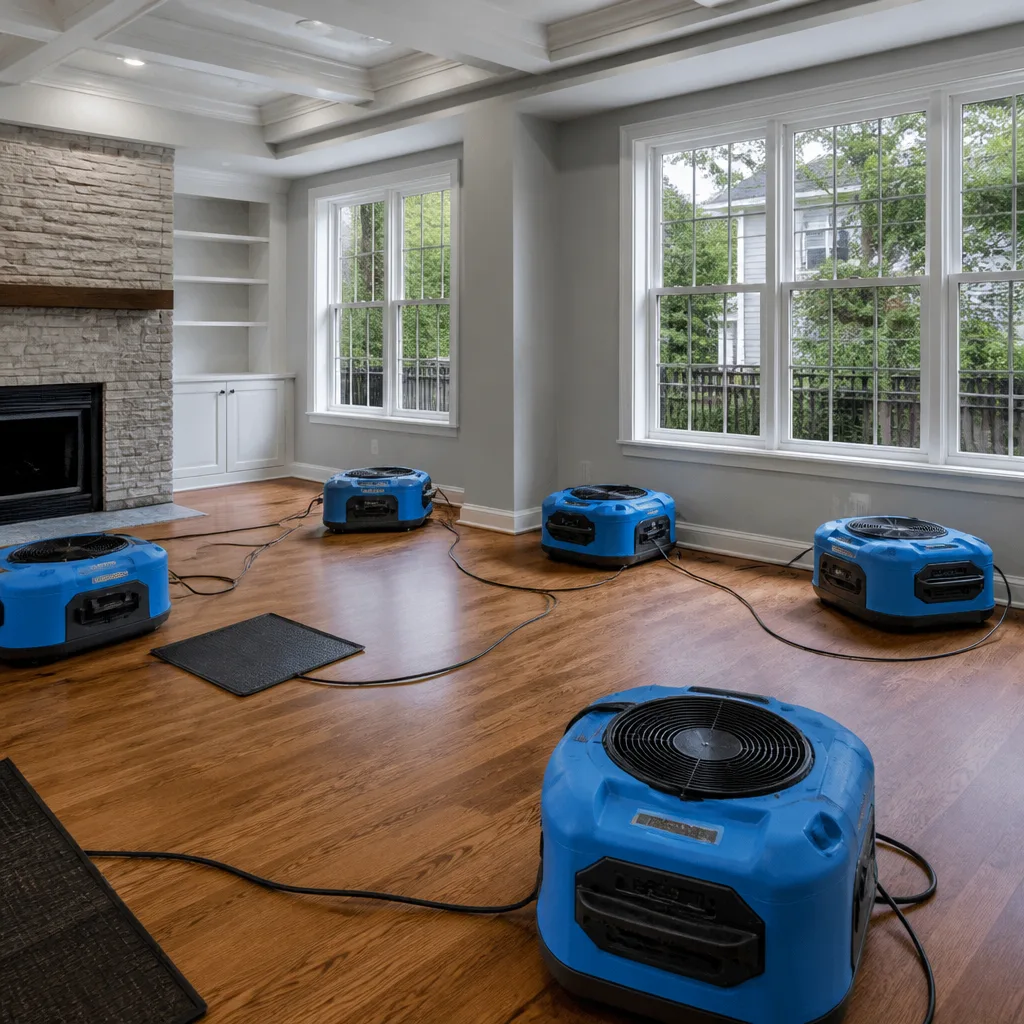
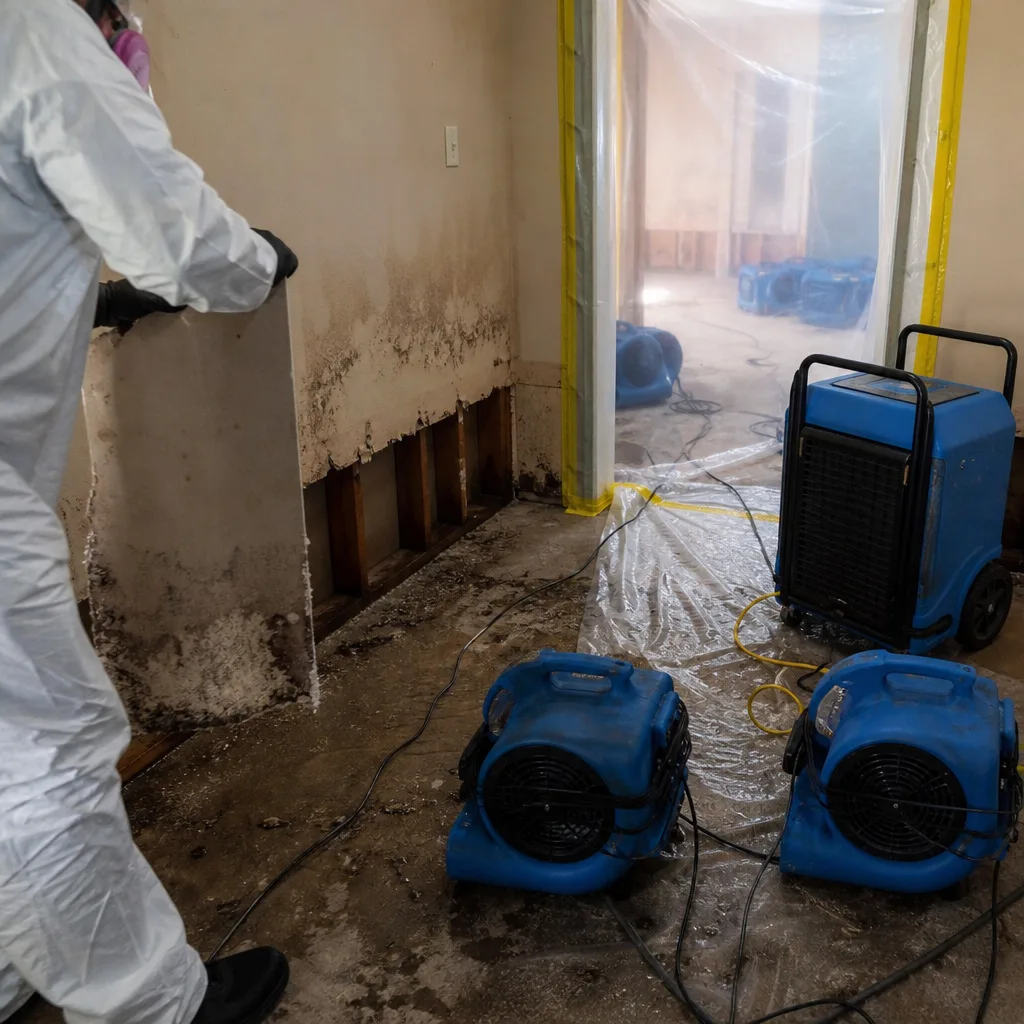
Here’s how it works in practice. After the fire is out and the property is safe to enter, our crew sets up containment, extracts standing water with truck-mounted equipment, and deploys professional-grade air movers and dehumidifiers from Dri-Eaz and Phoenix. We take moisture readings every four hours and log them. We don’t guess. The data tells us when the structure is actually dry enough for repairs. If the firefighting water is contaminated, we remove affected materials rather than trying to dry them in place.
Water Extraction After Fire Suppression
Most Houston homeowners are surprised by how much water comes out of a fire scene. Sprinkler systems, fire hoses, and burst supply lines all leave water behind. Extraction has to happen before drying can start. On a Houston pier-and-beam house, that means sealing the crawlspace first. If you don’t, humidity from the clay soil keeps re-wetting the subfloor, and the drying logs show no progress for days. We learned that the hard way on jobs across the city, and now we address it on the first visit.
Structural Drying and Monitoring
Drying a house in Houston is a different science than drying one in Phoenix or Dallas. The air here already holds moisture, so our dehumidifiers work harder and longer. We use desiccant drying technology from XPOWER and B-Air when conditions demand it. Every reading gets logged. Every reading gets shared with your adjuster if you’re filing a claim. The goal is getting your home dry enough to rebuild before the 48-hour mold window closes, not just when the surface feels dry to the touch.
Soot Removal in Houston
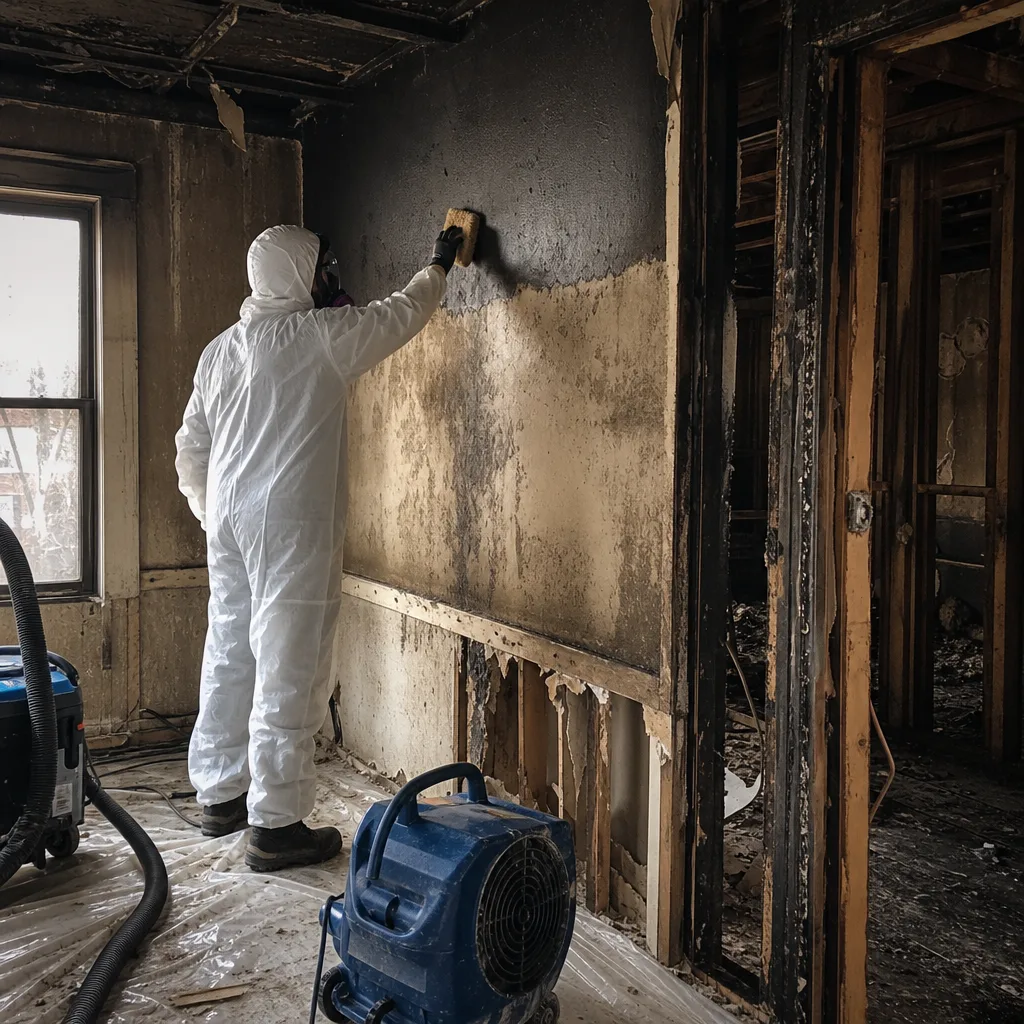
Soot Removal in Houston homes is not a wipe-down job, and anyone who treats it that way is setting you up for a second cleanup. Soot is acidic, oily, and microscopic. It works its way into drywall, grout, brick veneer, and ductwork. In a Houston house with forced-air AC running constantly, soot doesn’t stay in the room where the fire started. It gets pulled into the air returns and redistributed through every room in the house, sometimes weeks after the fire if it wasn’t caught the first time. Soot removal and smoke odor removal for a typical Houston single-family home runs $1,800 to $5,200, depending on the square footage and how far the soot traveled.
Our process starts with a scope of the affected area. We test surfaces, identify what type of soot we’re dealing with, and decide what can be cleaned versus what must be removed and replaced. Dry soot from a fast-burning fire behaves differently than wet, greasy soot from a slow smolder. Each requires a different chemistry and a different method. We spell all of that out in writing before we touch anything.
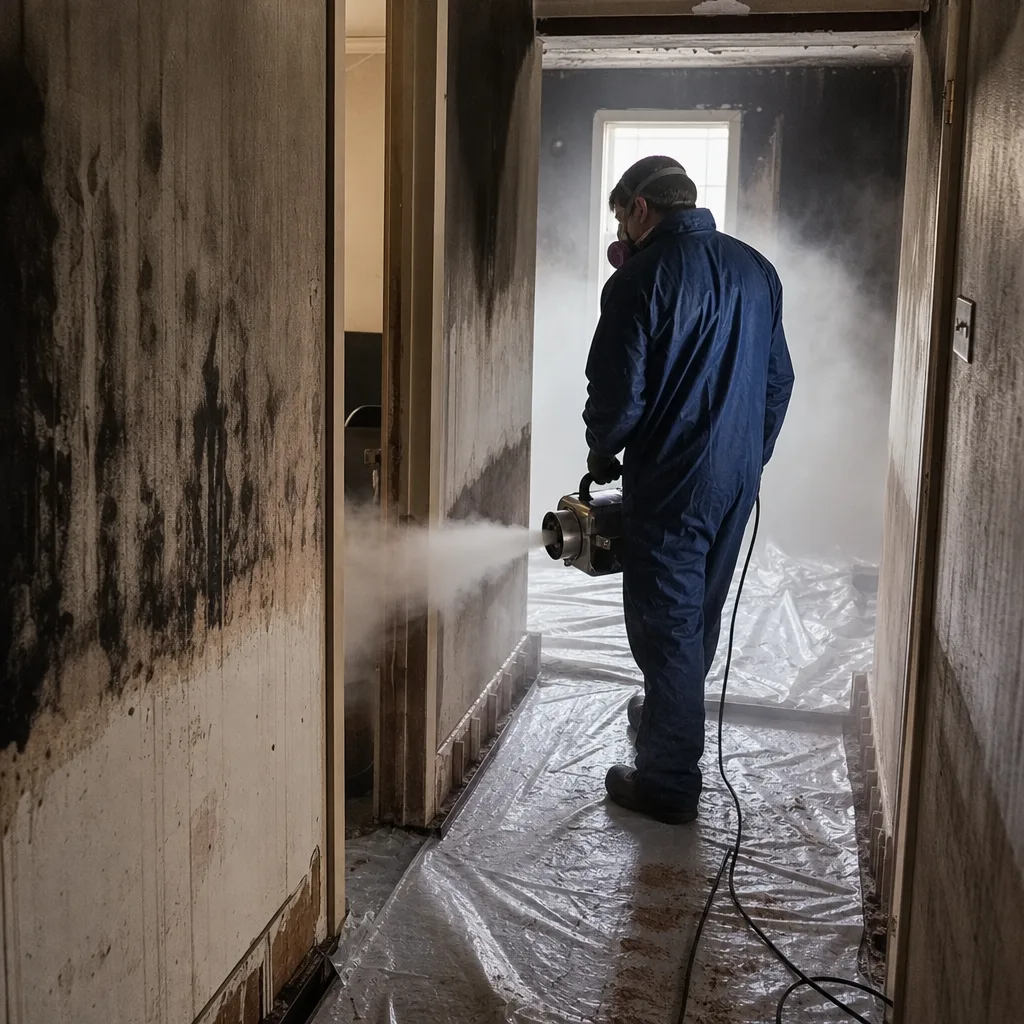
Air Ducts and the Hidden Soot Problem
In 1990s and 2000s suburban houses around Houston, the air returns are often in the hallway ceiling, right where smoke rises. If soot gets pulled into that return, the AC system becomes a distribution network. You’ll smell smoke in bedrooms that were never touched by flame. That’s not your imagination. It’s soot in the ducts. We inspect the air returns on every fire job, and we recommend duct cleaning or replacement when the testing shows contamination. Skipping this step is the most common reason Houston homeowners need a second pack-out weeks after the first restoration.
Smoke Odor Removal That Actually Removes the Odor
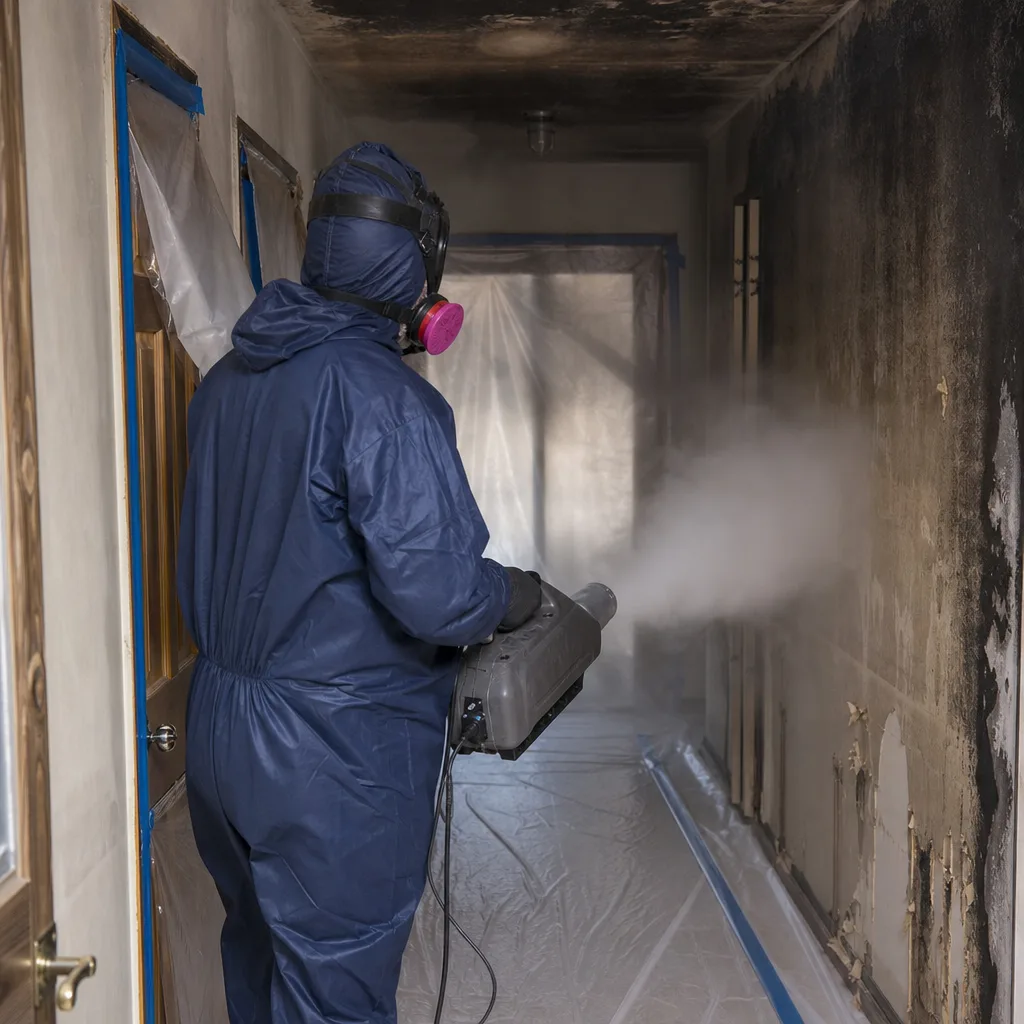
Masking smoke odor with deodorizers is not restoration. It’s postponement. Houston’s humidity makes odor molecules cling to surfaces and re-release as the house heats and cools. We use thermal fogging, ozone treatment where appropriate, and hydroxyl generators to neutralize odor at the molecular level. The equipment depends on what burned and what materials absorbed the smoke. We don’t run one machine because it’s what we have on the truck. We run what the job calls for.
Trusted Brands We Service in Houston
When we set up drying equipment in a Houston home, we’re putting in machines the homeowner has to live with for days. That’s why we run professional-grade brands like Dri-Eaz, Phoenix, and XPOWER. These are the air movers and dehumidifiers used in IICRC-standard restoration work, and they’re built to run continuously without failure. We stock the parts and filters these machines need locally in Houston, so if something does wear out mid-job, the replacement is hours away, not days. The same goes for Injectidry systems used in hard-to-dry cavities. Fast turnaround on equipment keeps your restoration moving, and keeps that 48-hour mold window from closing on an unfinished drying job.
See the difference
 Before
 After
After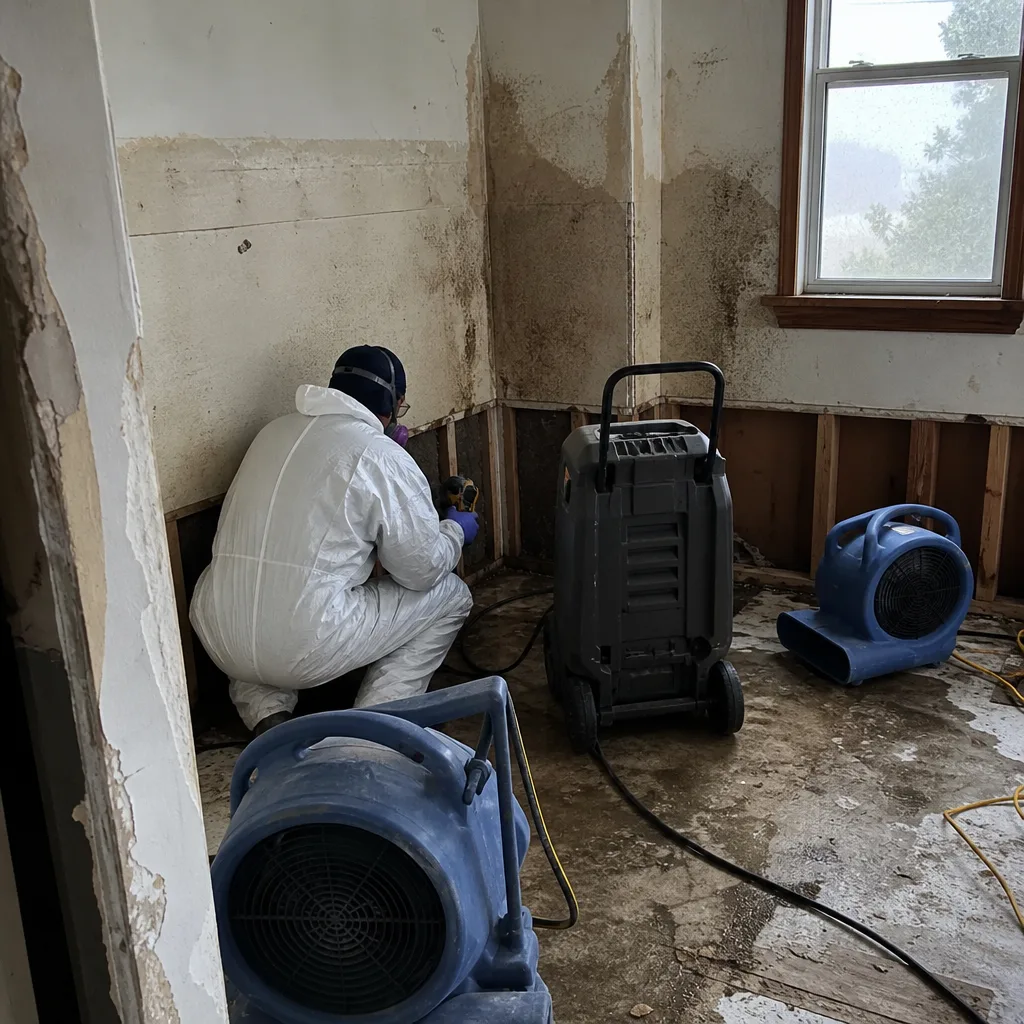 Before
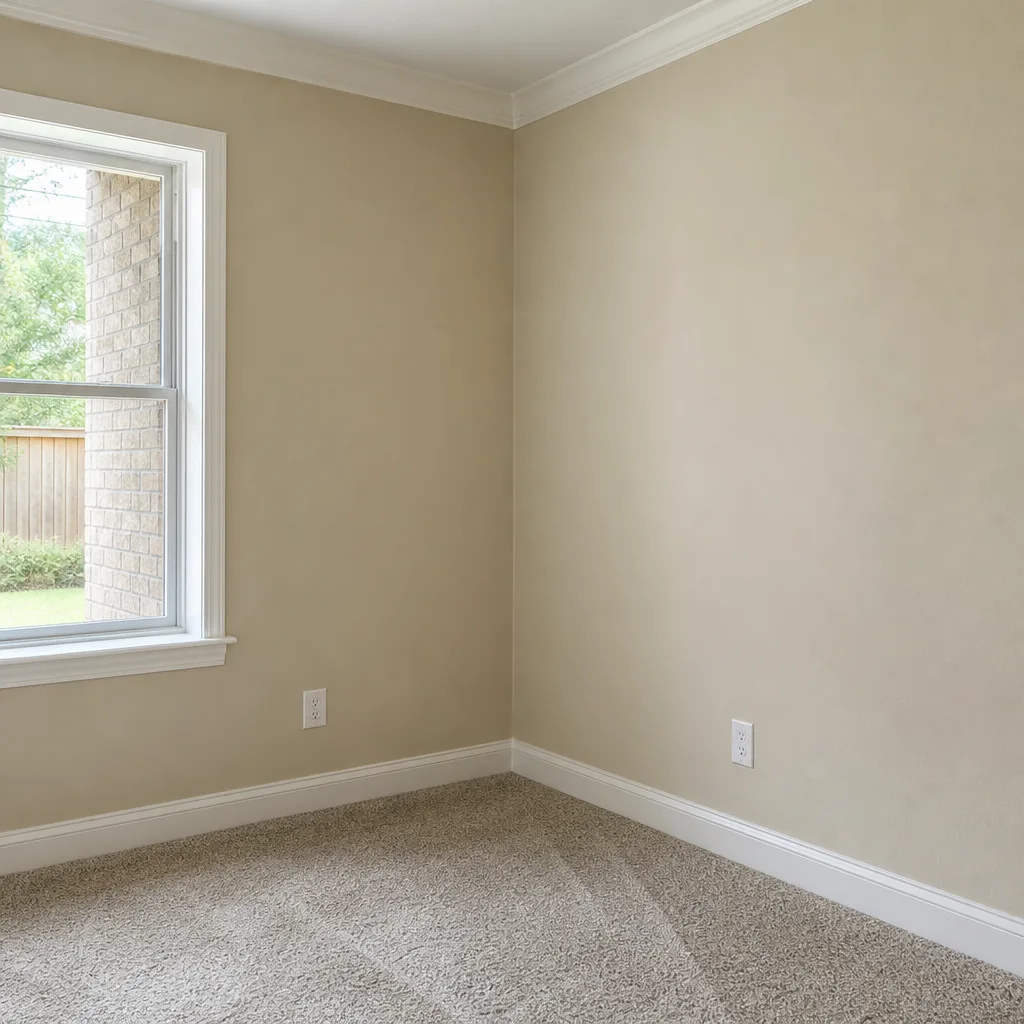 After
After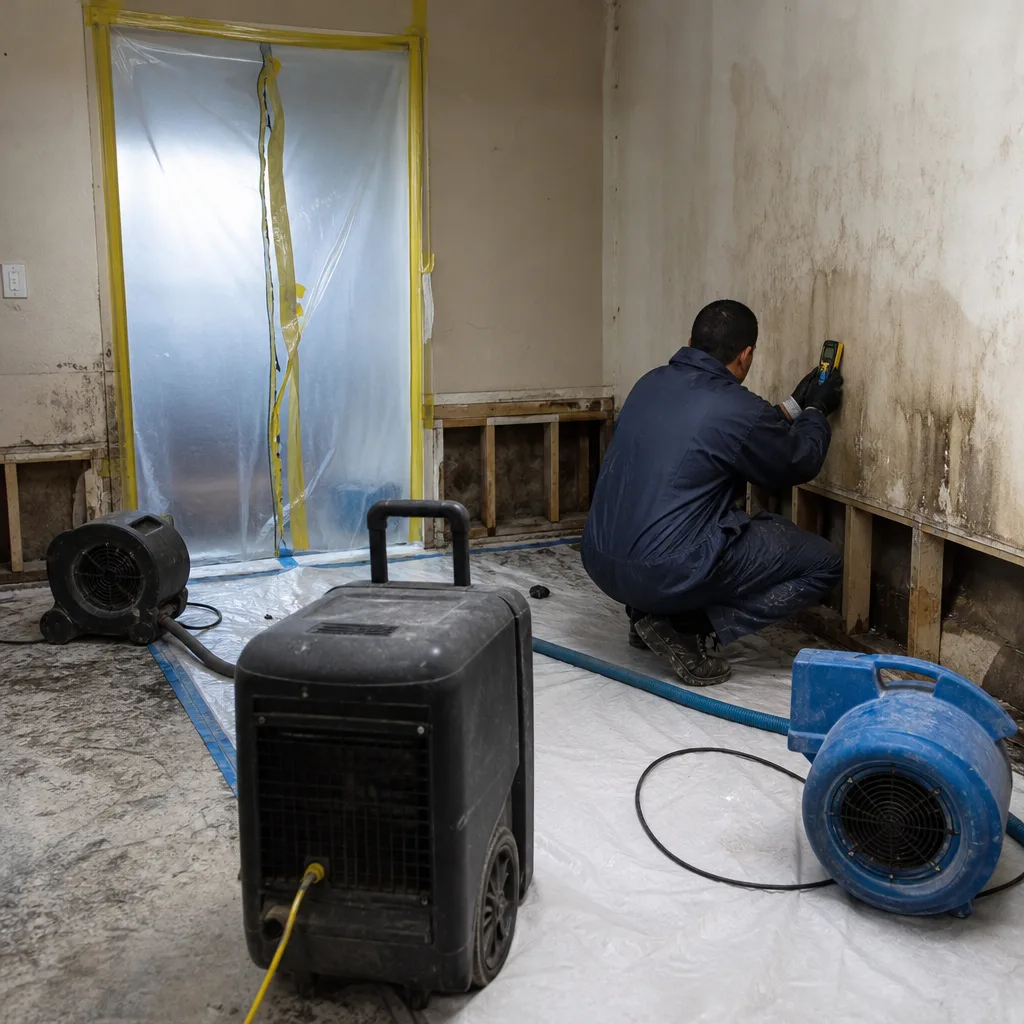 Before
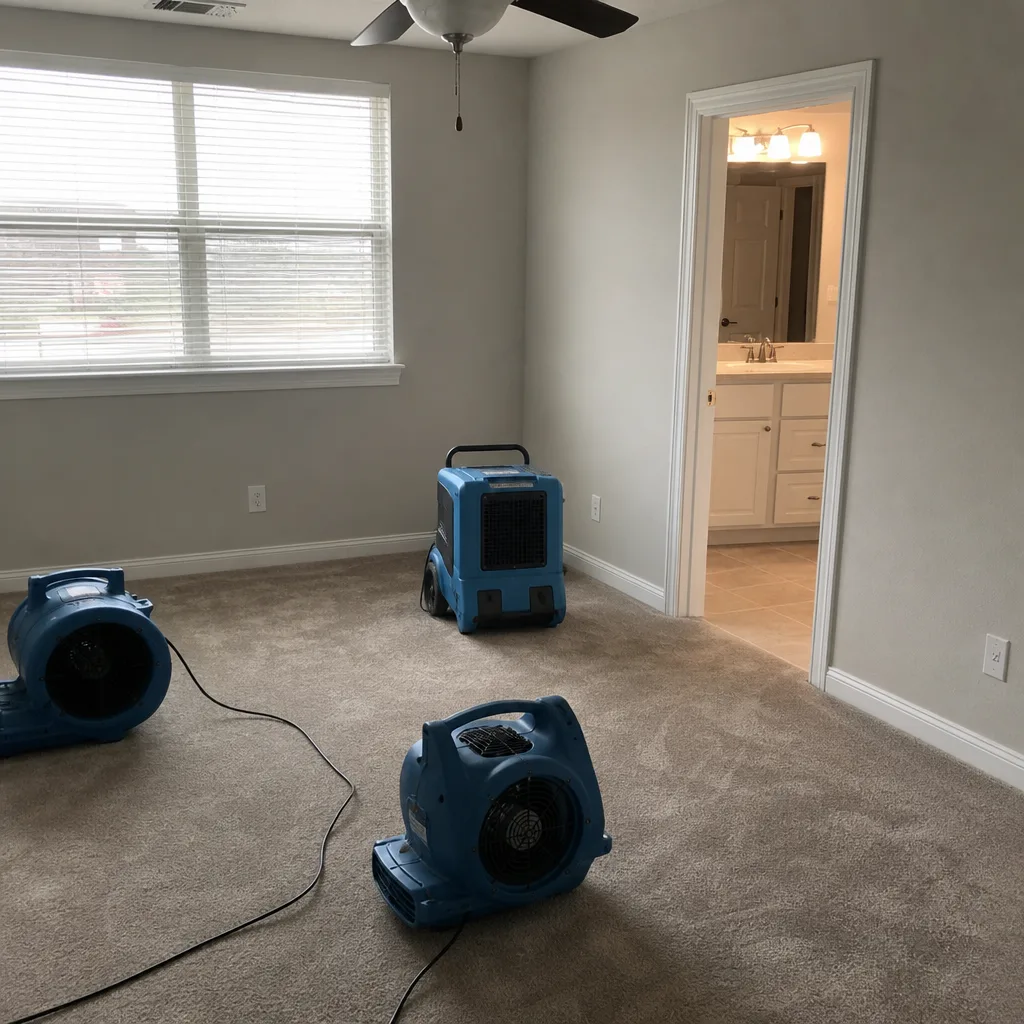 After
AfterCommon Fire Damage Restoration Problems We See in Houston Homes
- Water from firefighting soaking into slab-on-grade floors. In Houston’s 1970s and 80s ranch homes, the slab is the floor. Water pools on it, and if the pad has cracks or old adhesive, moisture wicks up into walls and baseboards. We map moisture on slabs differently than on wood subfloors, because the readings tell a different story.
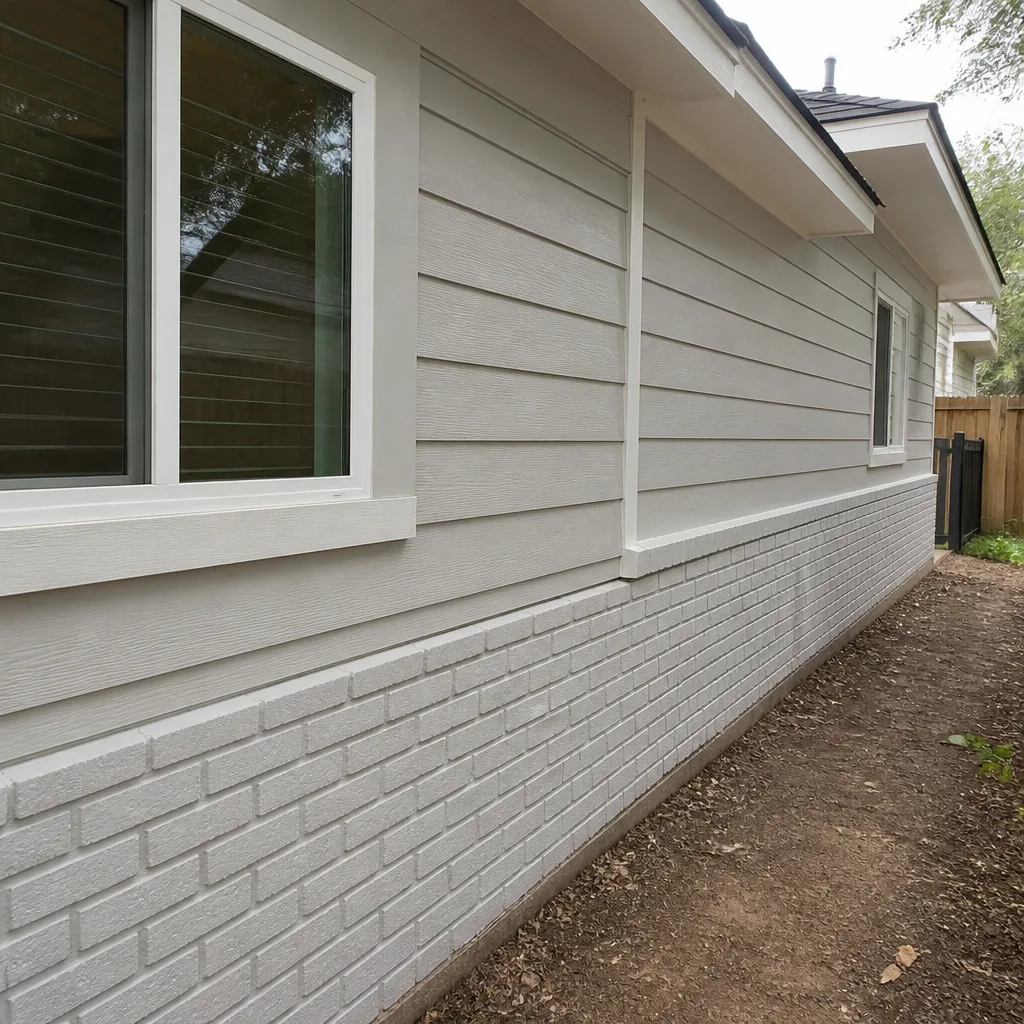
- Soot trapped in brick veneer weep holes. Houston’s brick veneer construction leaves small openings at the bottom of exterior walls. Soot from a fire can pack into those weep holes, and if it isn’t cleaned out, the smell returns every time the humidity rises. We’ve seen this on jobs in Meyerland and across the southwest side.
- Firefighting water that’s not clean water. In Houston homes near Brays Bayou, fire suppression water sometimes mixes with floodwater that’s already in the structure. That makes it Category 3, not Category 1. Drying it in place instead of removing contaminated materials causes cross-contamination and health hazards. Category matters, and we test before we decide.
- Pier-and-beam homes drying from the wrong direction. Houston’s older bungalows inside the Loop sit on pier-and-beam foundations with open crawlspaces. If the crawlspace isn’t sealed and the clay soil is wet, the subfloor won’t dry no matter how many fans you run upstairs. We address the crawlspace on day one, not day four.
Pricing for Fire Damage Restoration in Houston, TX
Houston fire restoration pricing runs on a range because no two fires leave the same house. A small kitchen fire with moderate soot and limited water damage typically runs $3,500 to $6,500. A whole-home smoke event with duct contamination and pack-out of contents runs $7,000 to $12,000. Structural fire repair, including framing, drywall, and finish work, starts around $8,000 and rises with the square footage and materials involved. Emergency board-up and tarping runs $500 to $1,500 depending on openings and access. What drives cost most is the water category, how far soot traveled, and whether the house is slab-on-grade or pier-and-beam. You’ll get a written line-item scope before work begins, so the number doesn’t shift on you mid-job. Call (325) 550-1783 for a free estimate, any hour.
We Also Serve Cities Near Houston
Keegan Restoration Houston runs crews to Bellaire, Baytown, Friendswood, and Missouri City. If you’re in one of those communities and need Fire Damage Restoration in Houston speed without the Houston traffic, we’ll get a crew rolling from our local dispatch. Our Fire Damage Restoration team covers the full metro with the same written price, same 365-Day Done Right Promise, and same live-person phone answer, 24/7.
Serving Houston, TX - Our Local Coverage Area
We’re based in the Houston area and know this community well. Use the map below to see our service coverage - if you’re nearby, we can almost certainly help.
FAQs About Fire Damage Restoration in Houston
Because the firefighting water that saves the structure also soaks it, and in Houston’s flat, clay-heavy terrain, that water has nowhere to drain. Extraction and drying have to begin immediately, before the 24 to 48 hour mold window closes. Call (325) 550-1783 and we’ll start the water removal the same day.
We treat the AC system as part of the damage path. Soot that reaches the air returns gets pulled through the ductwork and redistributed, so we inspect and test the returns on every fire job, and we recommend duct cleaning or replacement when contamination is confirmed. Skipping this step is the most common reason Houston homeowners call us back weeks later with smoke smells in untouched rooms.
Many homes along Brays Bayou have flooded before, some multiple times, and some have been bought out and rebuilt on raised foundations. When a fire hits one of these houses, the firefighting water often mixes with residual flood contamination and old moisture damage, which changes the water category and the scope of the job. We know which properties are repeat offenders before we arrive.
No. If the firefighting water mixed with Brays Bayou floodwater, sewage, or chemicals from the fire itself, it’s Category 3 contamination. Drying those materials in place spreads contamination. Those materials get removed and replaced. We test the water and the surfaces before we decide what gets dried and what gets cut out. Call us for an honest assessment, in writing, before any work starts.
Often yes, if the water hasn’t sat against the hardwood for more than a few days, and if the crawlspace is sealed and dried properly. Injected drying from the underside, using Injectidry systems under the house, pulls moisture out of the wood without ripping it up. If the floors are warped or the moisture mapping shows saturation beyond recovery, we’ll tell you straight, with the numbers to back it up. Call (325) 550-1783 for a free on-site assessment.
Written by Shane Pruitt, Owner at Keegan Restoration Houston, serving Houston since 2005.